Explore the science
Learn how load, motion, buoyancy, air pressure, engineered guideways and power constraints shape mobility.
From water to wheels, from magnetic tracks to cushions of air. Explore Aurora's hybrid-lift thesis through 12 teachable missions, physics tools, an interactive mission game, and a research notebook.
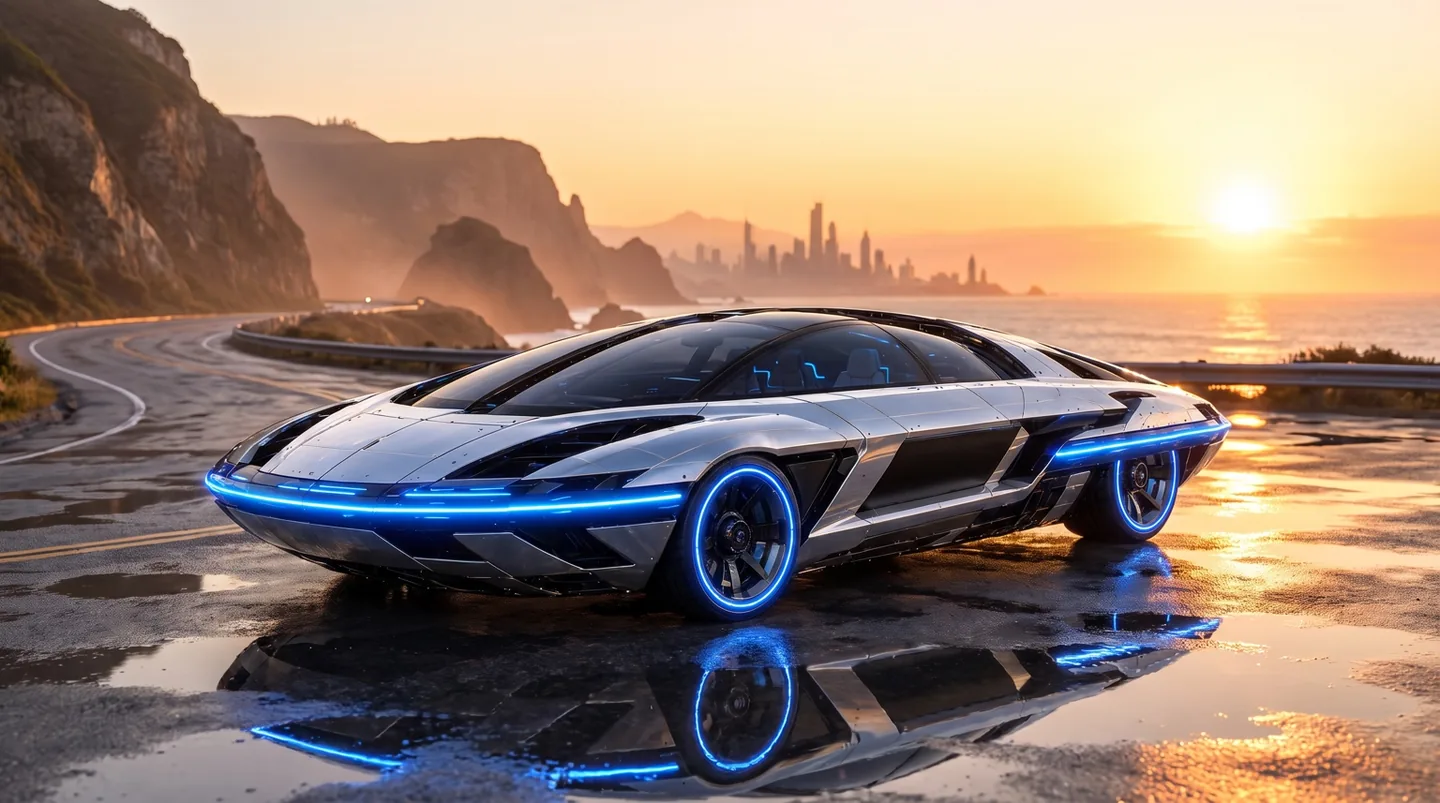
Step through the component sequence, compare lightweight structural metals and polymers, assemble the eight-wheel/four-track research chassis, or explore HOPE accessibility and cabin design. This is an educational digital mock-up, not manufacturing instructions.
Open the Aurora Assembly Workshop ↗A concept becomes research when the question can be tested, the evidence can be recorded, and the result can be challenged. This course adds a new inquiry track to the existing AHF Exploration STEM Academy programs.
Learn how load, motion, buoyancy, air pressure, engineered guideways and power constraints shape mobility.
Change assumptions in idealized classroom calculators. Observe why there is no single magic hover mechanism.
Choose the appropriate operating system across four environmental scenarios and earn research XP.
Can a small, unmanned educational platform demonstrate distinct mechanisms of magnetic guideway levitation, water buoyancy, and near-surface air-cushion support—and document which transitions remain unresolved?
Concept attribution: Leah Paige assisted with Aurora concept development and research. Academy activities are independent STEM curriculum, not university credit, NASA endorsement, vehicle certification or an actual prototype test.
Select a mission to examine its scientific claim, lesson objective, evidence assignment and a short knowledge check. Mark a mission complete after reviewing and attempting the check.
Three simplified classroom calculators illustrate *different* mechanisms. They are not a simulation of an engineered vehicle, flight performance or certified safety margin.
Choose a support mechanism that fits the environment. Incorrect choices are part of the scientific process: Merlin will explain the forces and let you try again.

A 12-question self-check draws from the classroom missions. At 9 out of 12 or better you earn the on-device Research Ready badge. It is *not* an academic certificate or professional qualification.
Record your own hypothesis, controlled conditions, numerical measurements and what might explain an unexpected result. This stays in your current browser until you export or clear it; do not enter personal or health information.
This proposed research unifies the questions, not the proven hardware. The engineering mechanisms stay separate until repeatable experiments justify integration.
Primary question: Can an educational unmanned scale platform demonstrate near-surface air-cushion support, hydrostatic buoyancy and engineered-guideway magnetic levitation in separate bounded tests, and use traceable data to assess future integration requirements?
Working hypothesis: Each mechanism can be demonstrated within its established domain. Reconfiguration interfaces, control continuity, energy usage and safe mode transitions are unknown until measured. There is no evidence that magnetism alone enables unrestricted free hovering over ordinary water.
Water: model mass, immersed volume, salinity; control water temperature, external geometry and measurement method. Air cushion: effective support area, leakage and supply; control model mass and ground surface. Guideway: magnet array, track composition, speed; keep clearance and orientation recorded. Measure repeatability, not appearance.
The integrated concept fails its stated claim if any module cannot generate sufficient support, cannot transition safely, exceeds available energy, or cannot recover from faults under the predeclared conditions. A classroom simulation is not a prototype measurement. No human-rated aircraft, underwater craft, orbital or lunar vehicle is demonstrated here.
The educational goal is to build safe, accessible, source-linked STEM experiences for youth, families and veterans. Leah Paige is recognized for contributions to concept research. Schools, universities and medical institutions listed on AHF's community hub are potential connections or independent giving recipients, not assumed research partners.
How much power is required per mode? What failures force an immediate stop? Which modes have incompatible structural demands? How can sensor metadata remain comparable across trials? What evidence would justify an engineering gate review?
A structured classroom outline, instructor field notes and source-linked material. Resources are independent and do not imply sponsorship by the agencies that host public educational content.